






Overview
Tactiq is an AI-powered meeting transcription platform that helps teams turn conversations into actionable insights.
As Senior Web Designer, I owned the design, development, and optimization of Tactiq's marketing website. Collaborating with Product and Growth, I focused on improving conversion pathways, launching new product experiences, and building scalable Webflow systems.
The challenge -
Optimizing a high-traffic website for continued growth
As Tactiq expanded its product capabilities and global audience, its marketing website needed to evolve alongside the business.
With millions of monthly website visits and a rapidly growing user base, even small improvements to conversion pathways had the potential to make a meaningful impact.
My priorities were to improve Chrome Extension discovery, reduce friction across key user journeys, and create engaging digital experiences that supported product adoption and growth.
01. Improving product discovery through experimentation
Using Microsoft Clarity heatmaps, session recordings, and Mixpanel analytics, I identified user friction, developed hypotheses, and implemented data-informed website experiments to improve product discovery and conversions.
Working closely with the Product Growth Manager, I evaluated performance through A/B testing and behavioral analysis, using the findings to guide ongoing website optimization.
Test 01 — Navigation optimization
Hypothesis
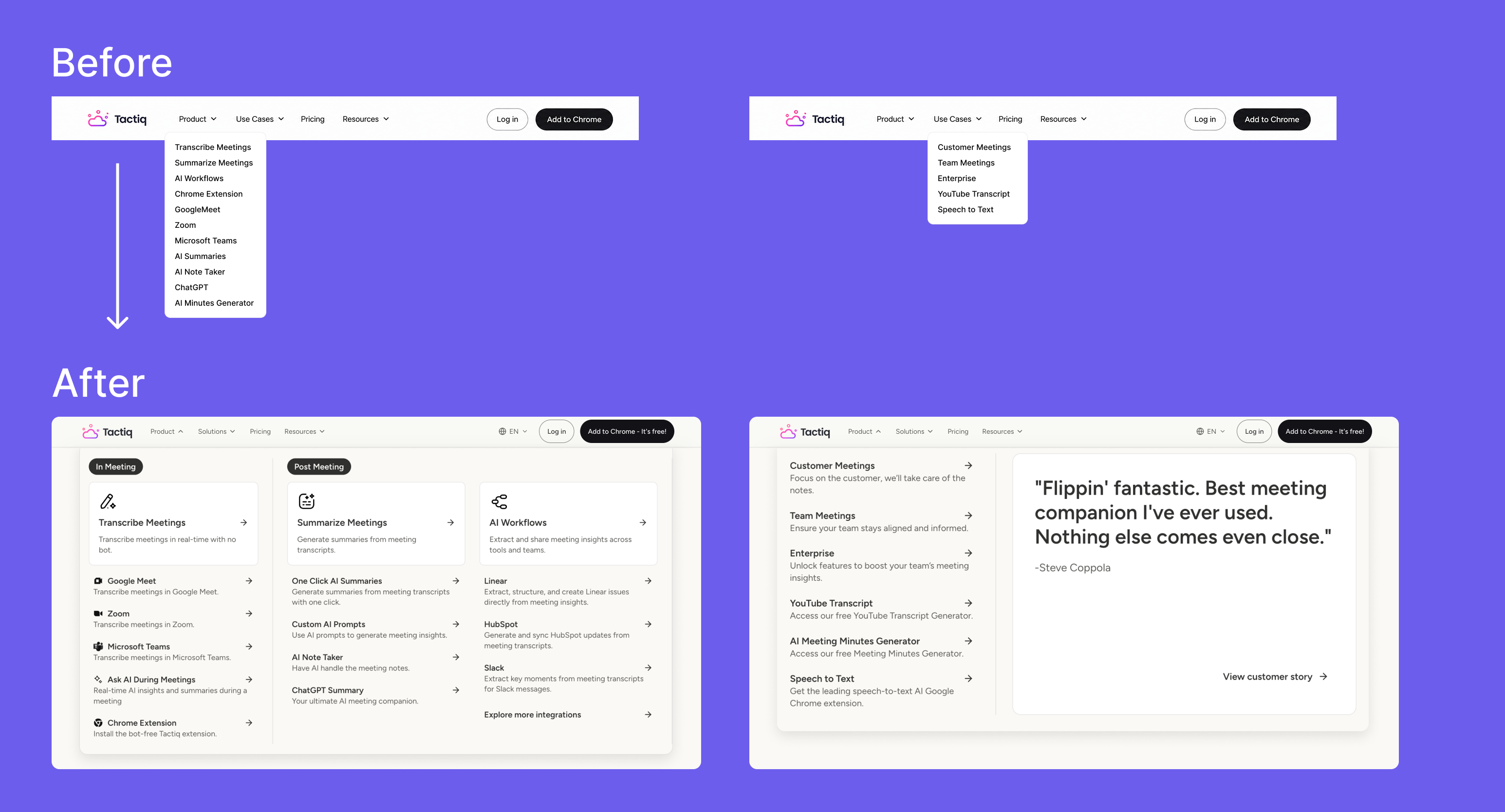
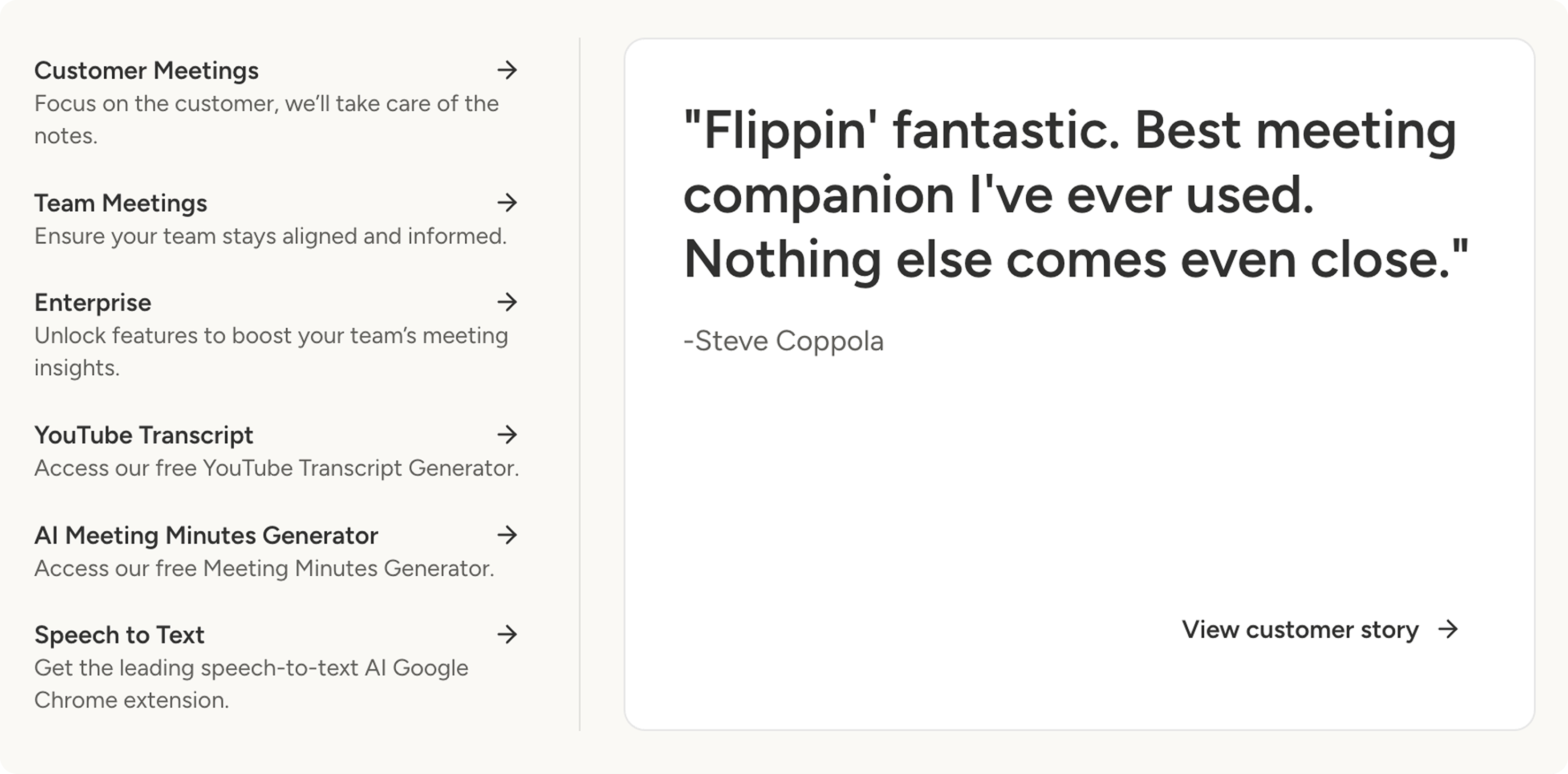
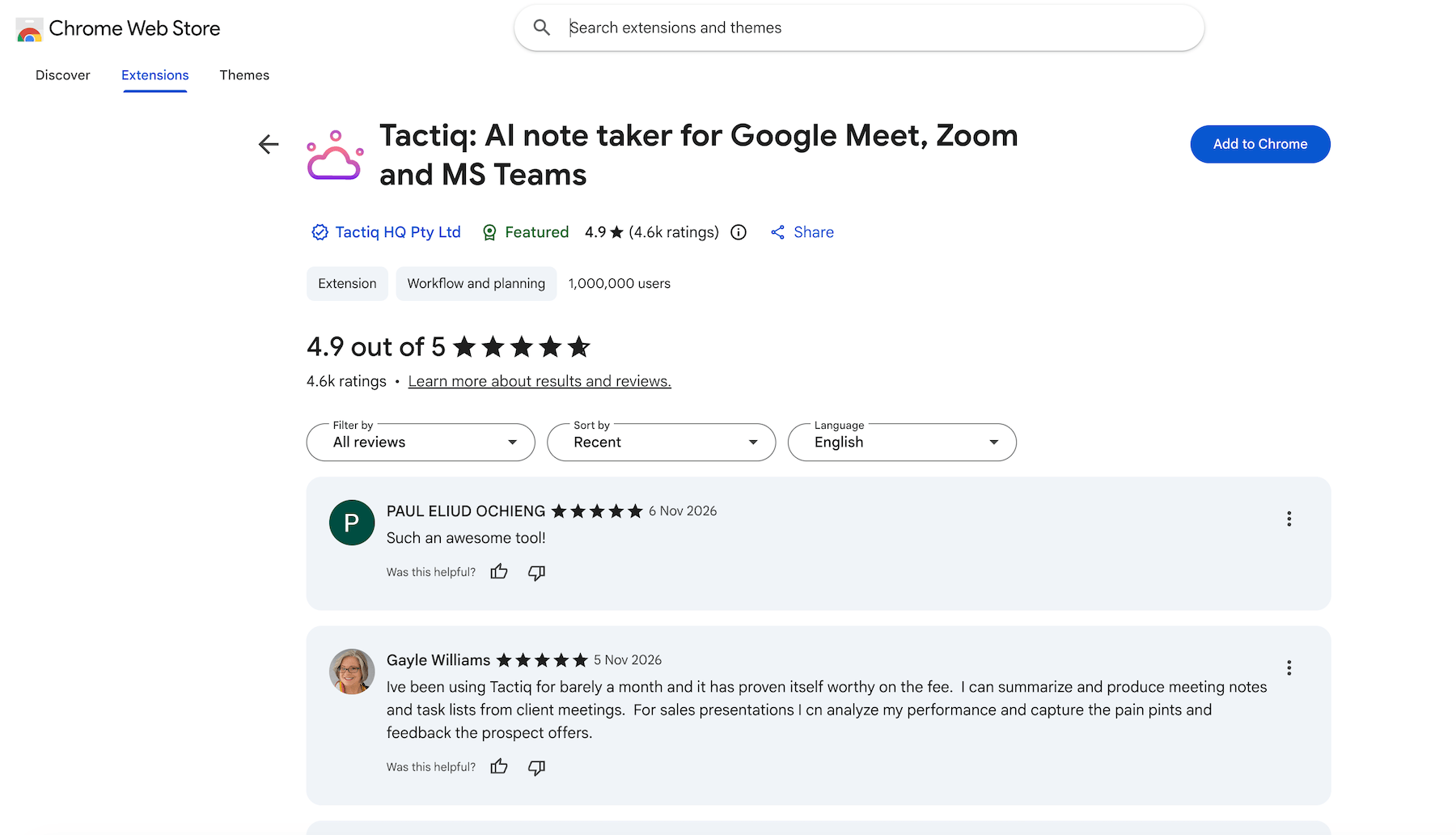
Reorganizing navigation around high-priority destinations and introducing customer testimonials would improve product discovery, reduce friction, and increase conversions.
What I did
Analyzed user behavior through heatmaps, session recordings, and conversion data to identify navigation friction, understand user journeys, and determine which destinations were most relevant.
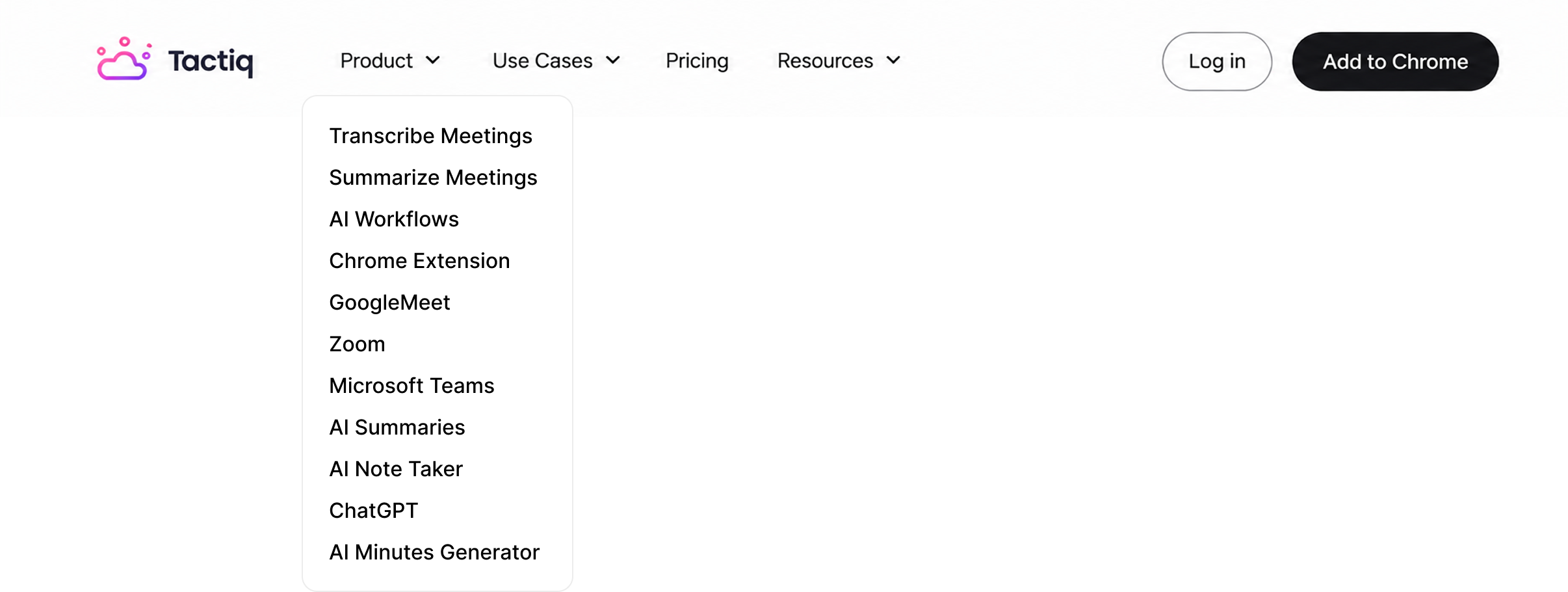
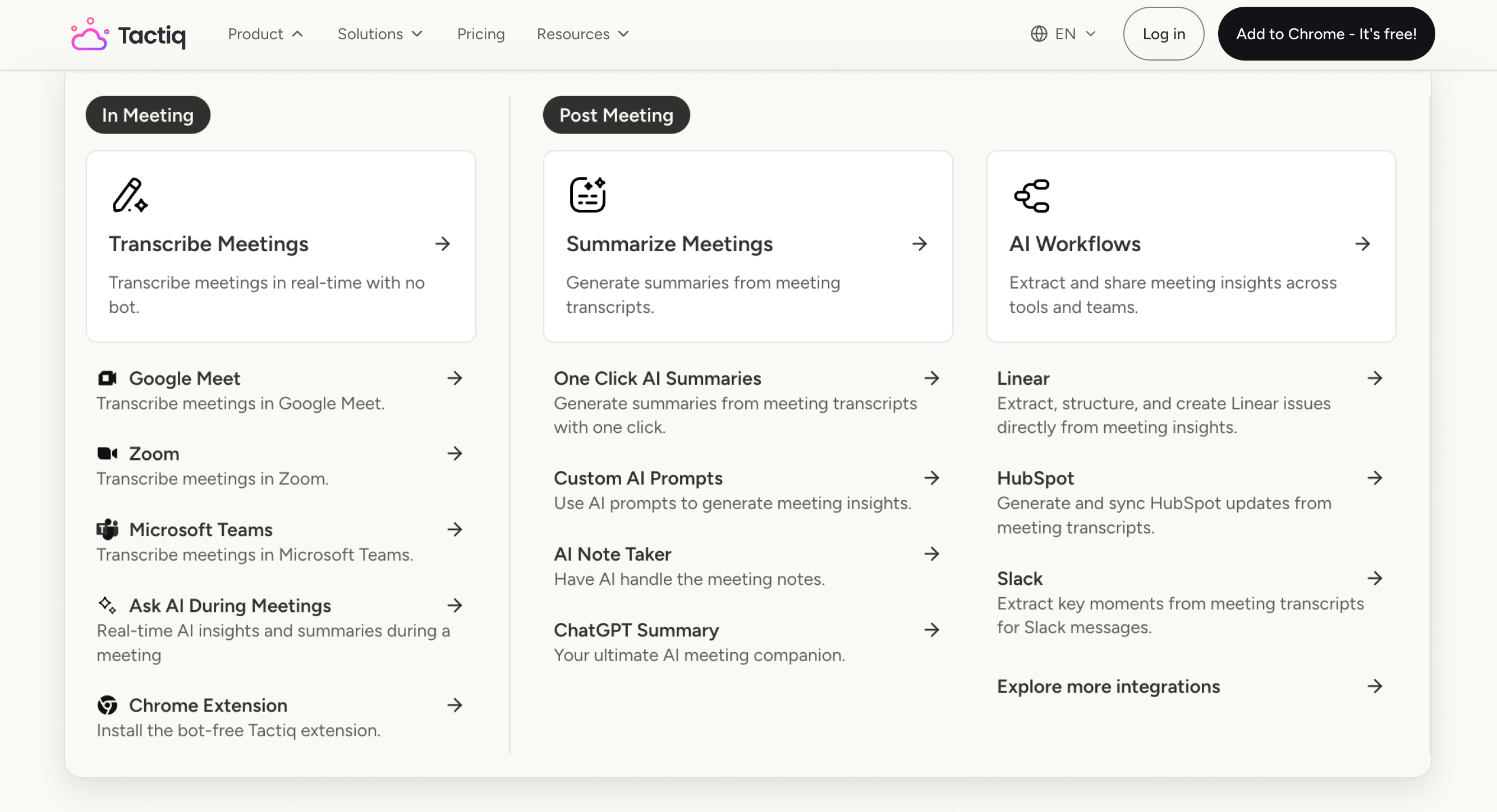
Redesigned the navigation hierarchy to prioritize key product pages and introduced a prominent customer testimonial with a CTA linking directly to the Chrome Web Store.
Tools & process
- Behavioral analysis: Set up a one-week Microsoft Clarity study using heatmaps and session recordings to identify navigation friction, UI confusion, and drop-off points across key pages.
- Experiment analysis: Collaborated with the Product Growth Manager to review Mixpanel data and identify opportunities for improvement.
- UX & design: Developed an improved navigation structure through site mapping, wireframing, and UI design.
- Implementation & testing: Designed and developed the navigation improvements, then supported a one-week A/B test through Mixpanel, reaching a total experiment sample size of 100,000 users. A second Microsoft Clarity study ran concurrently to observe changes in user behavior.
- Performance analysis: Evaluated Mixpanel results alongside Clarity heatmaps and session recordings to understand changes in user behavior and conversion performance.
- Optimization: Used the findings to finalize the improved navigation experience.
Outcome
- +7.6% relative improvement in conversion rate.
- −5.2% relative reduction in user drop-off.
- +6.3% improvement in the tracked conversion/click-through metric associated with the testimonial CTA, as part of the combined navigation changes.
The experiment provided actionable insights into how navigation hierarchy and social proof could improve product discovery, reduce friction, and encourage users to take the next step.
Test 02 — CTA messaging optimization
Hypothesis
Explicitly communicating that the Chrome Extension was free would reduce perceived barriers to adoption, increase clarity, and encourage more visitors to click the primary CTA.
What I did
Updated the primary CTA messaging from "Add to Chrome" to "Add to Chrome — It's Free" to reinforce the product's accessibility and value proposition. Compared CTA click performance over a one-week period.
Outcome
- +17.2% increase in total CTA clicks.

Test 03 — Above-the-fold social proof
Hypothesis
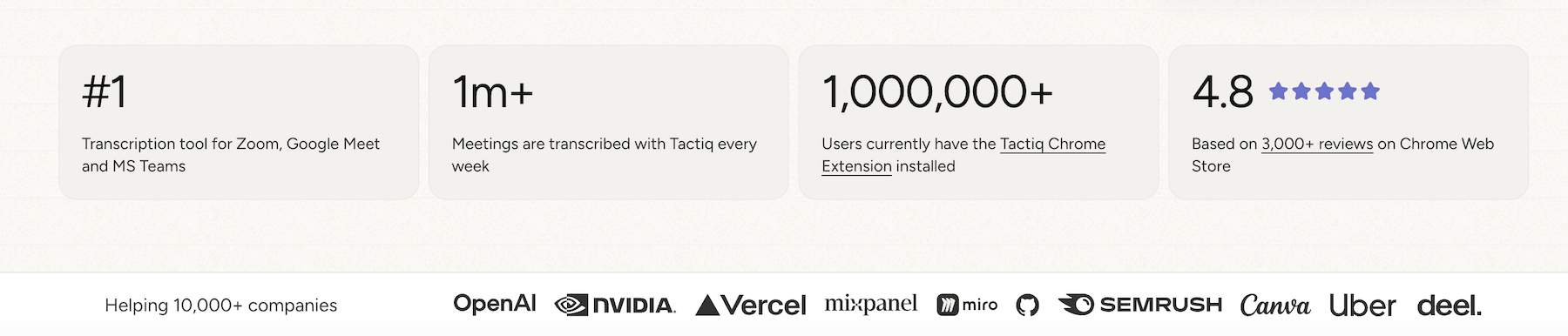
Introducing recognizable customer logos and key data points earlier in the user journey would establish credibility, reduce uncertainty, and encourage more visitors to explore the product.
What I did
Introduced customer logos and key product data points above the fold to establish trust immediately upon landing. Evaluated changes in engagement and the tracked conversion/click-through metric using Mixpanel and Microsoft Clarity.
Outcome
- +11.4% improvement in the tracked conversion/click-through metric.
Results reflect observed before-and-after performance changes rather than randomized A/B tests.
02. Launching Tactiq Workflows
Bringing a new product experience to market
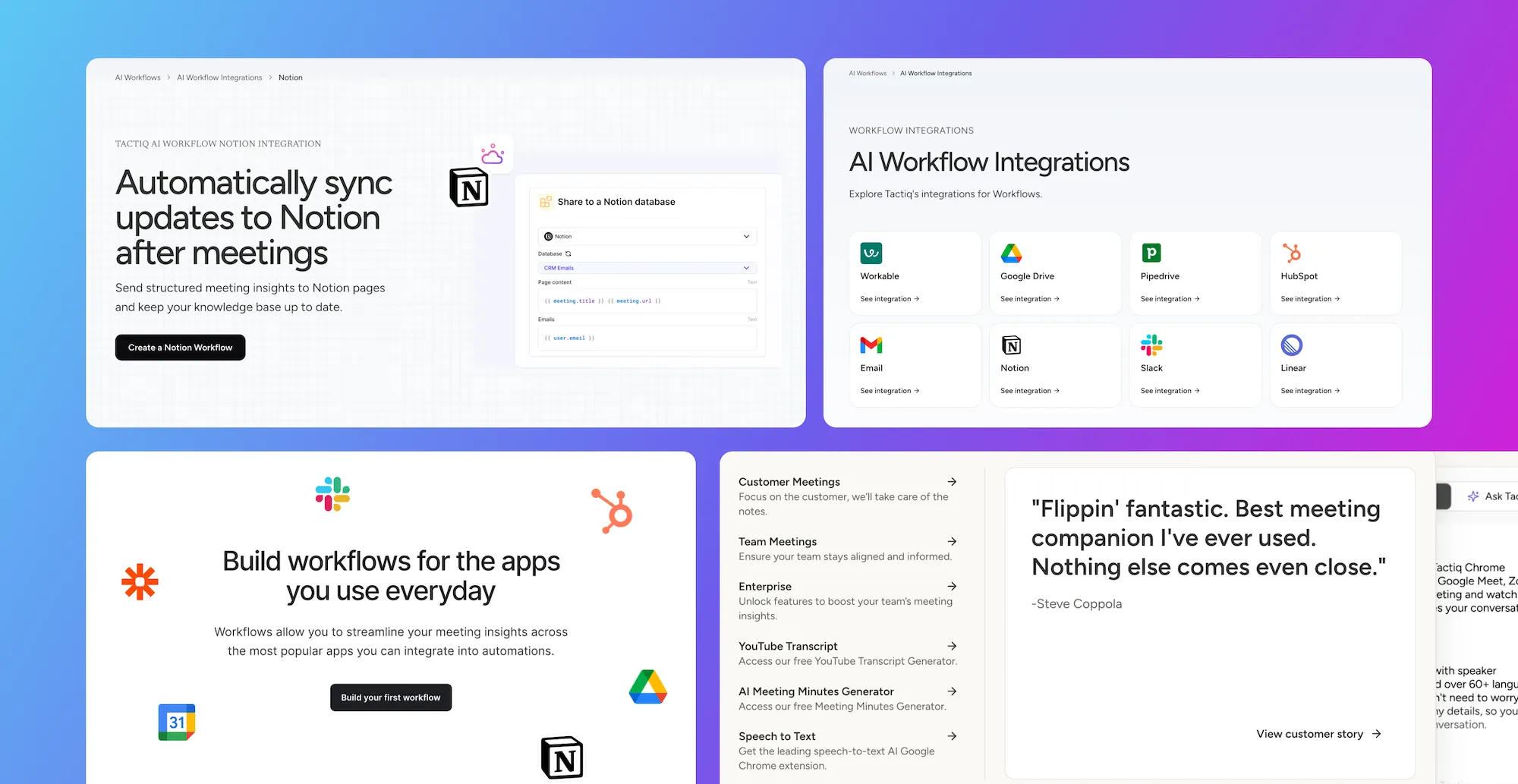
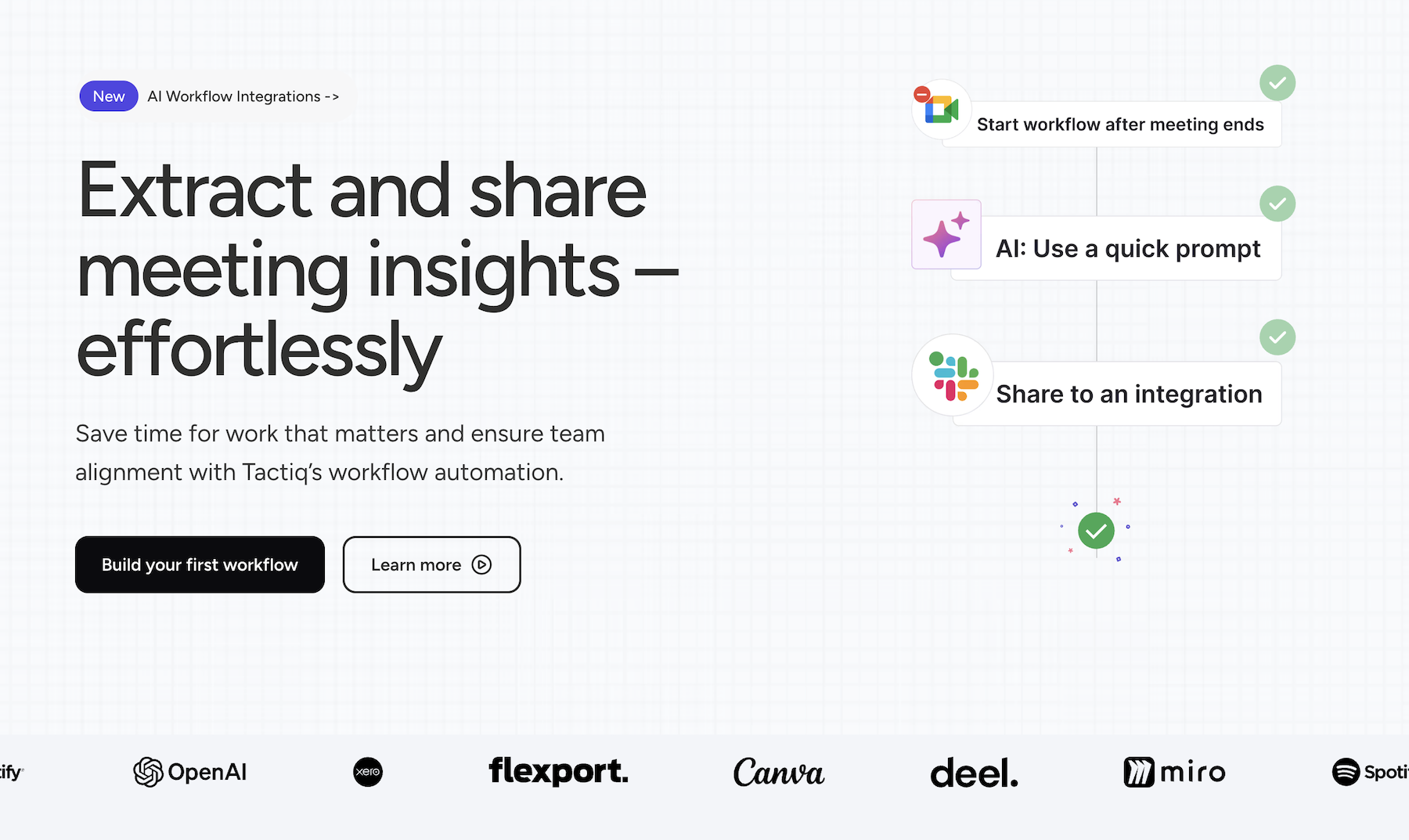
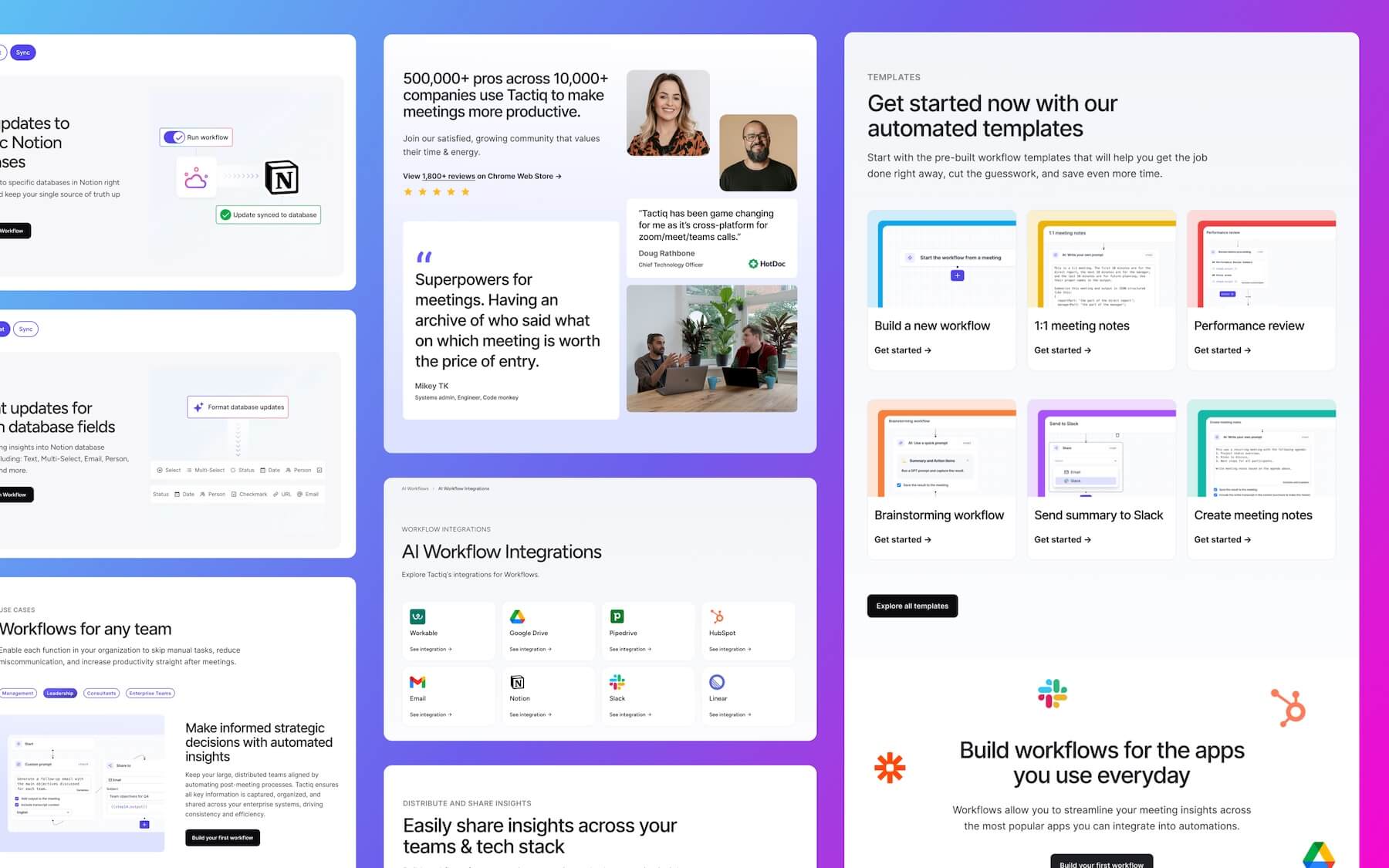
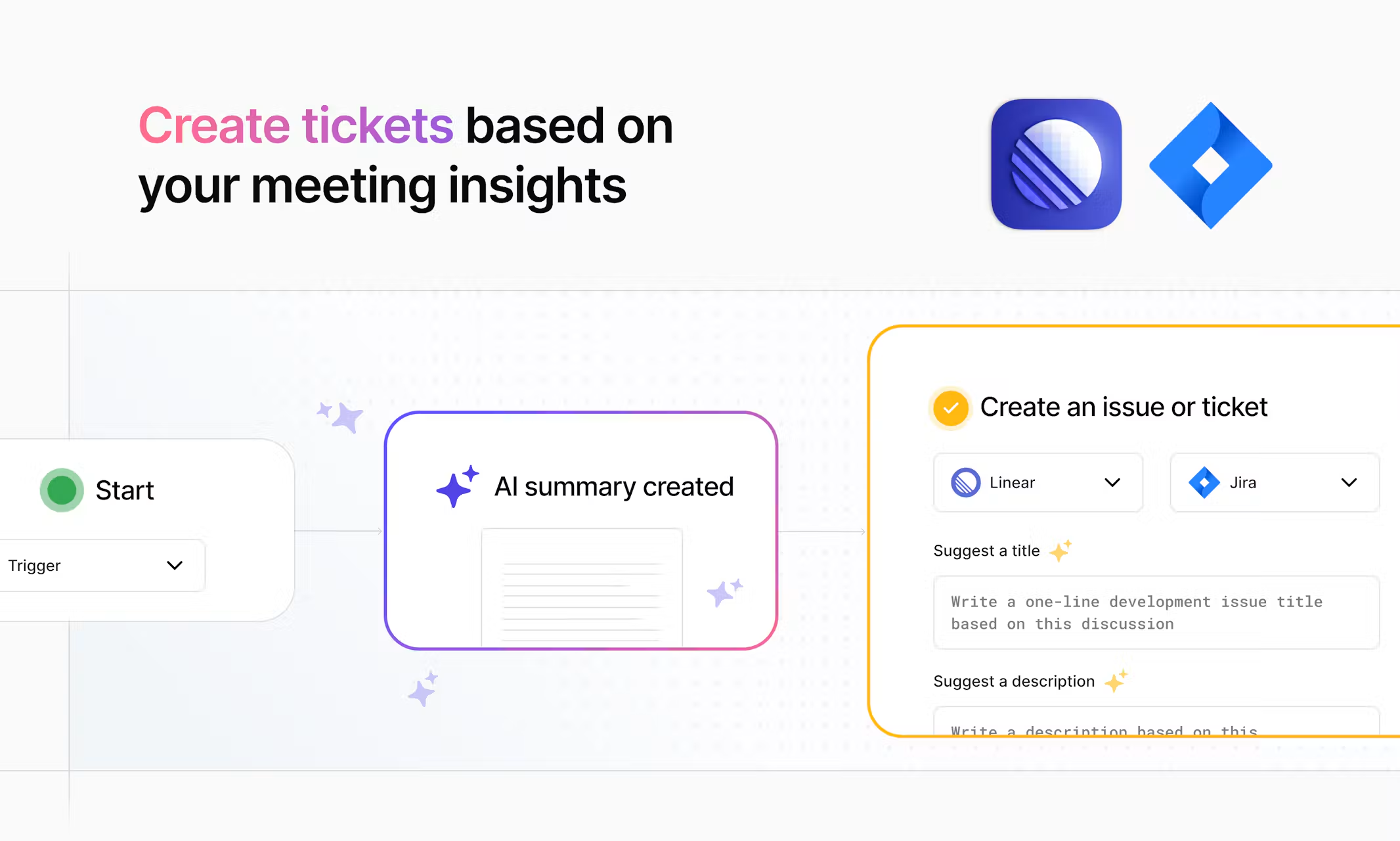
Working with Product and Growth, I designed and developed the marketing website experience for Tactiq's new Workflows feature, translating complex product capabilities into clear, engaging user journeys.
Key deliverables
- Dedicated Workflows landing page
- Integrations directory
- Eight integration pages, including Slack, Notion, HubSpot, Linear, Workable, Pipedrive, Google Drive, and Gmail
- Reusable Webflow CMS templates
- Supporting marketing assets for the Product Hunt launch
Outcome
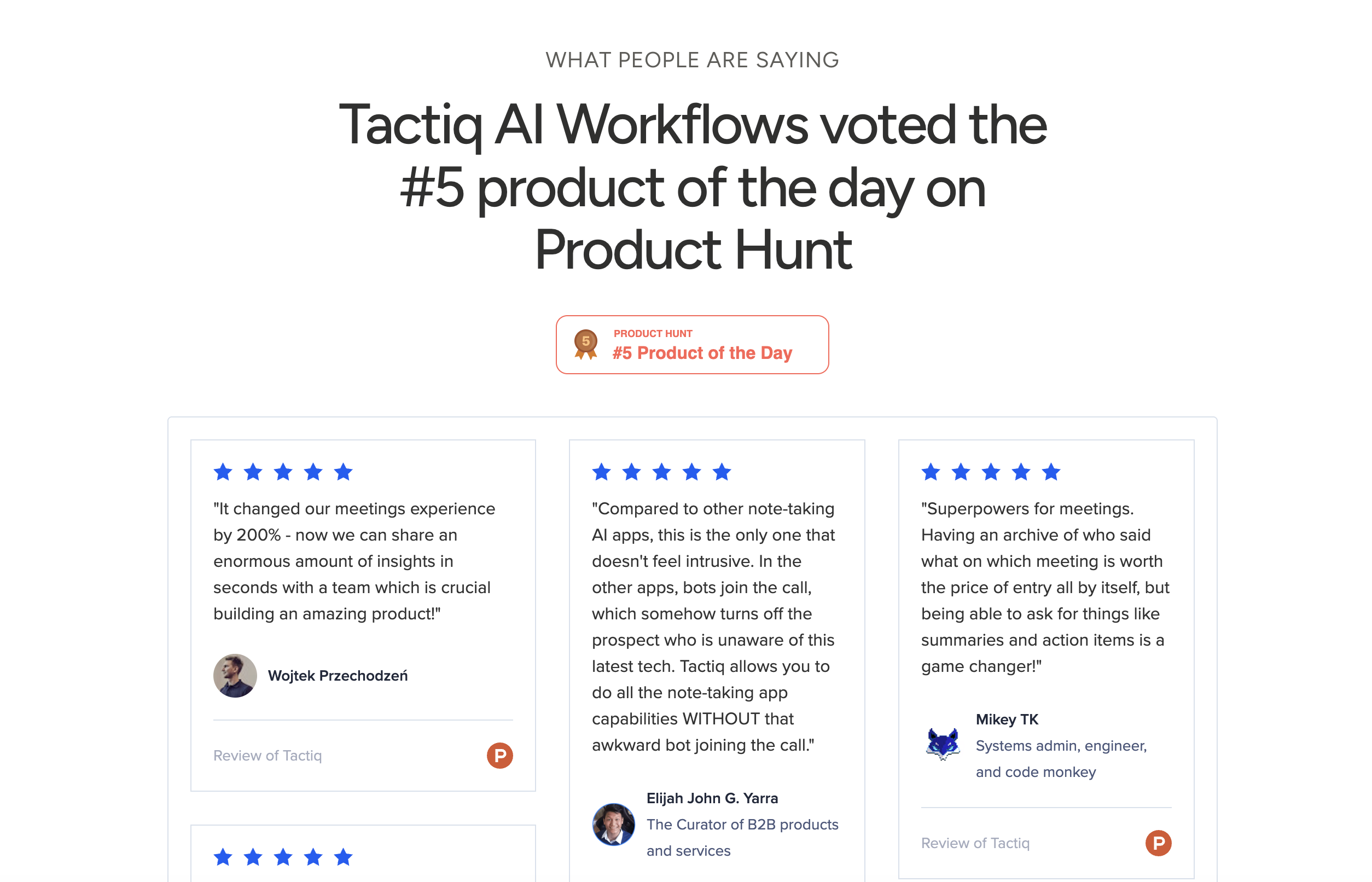
Supported a successful product launch that reached #5 Product of the Day on Product Hunt, while establishing a reusable CMS architecture to support future integration launches.
03. Building scalable website systems
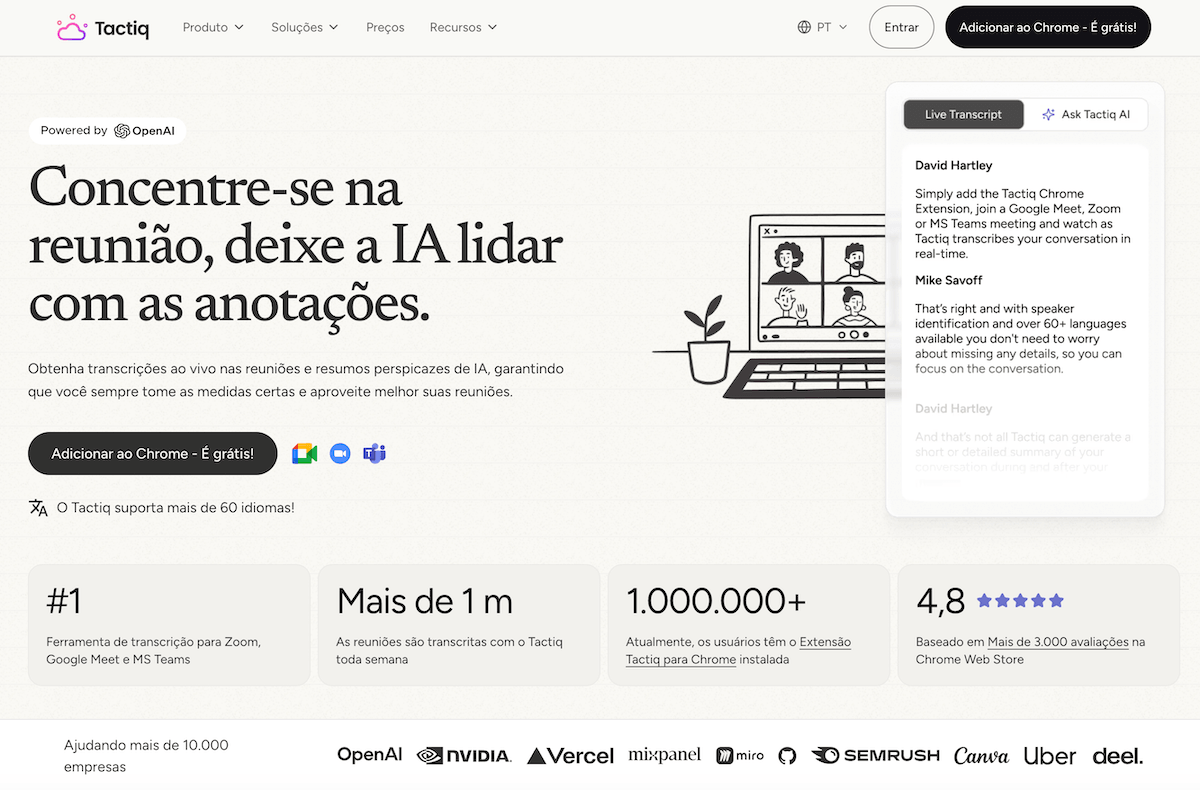
Introduced reusable components, visual patterns, and Client-First development practices to improve consistency and maintainability across the pages I owned.
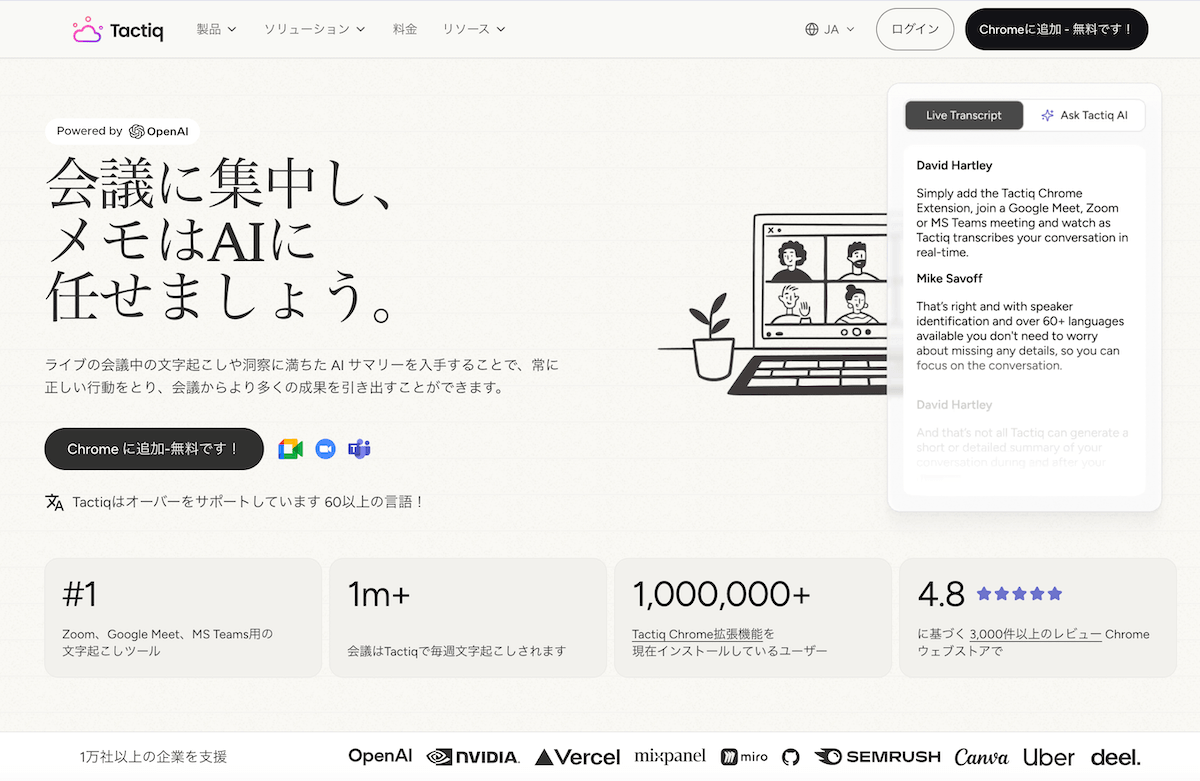
Expanded Portuguese and Spanish website experiences and implemented Japanese localization to support Tactiq's growing international audience.
Outcome
Established reusable design and development patterns that simplified website maintenance, supported localization, and made future product launches easier to scale.
The impact
- +7.6% conversion rate: Improved navigation hierarchy and product discovery.
- −5.2% user drop-off: Reduced friction across navigation pathways.
- +17.2% CTA clicks: Optimized Chrome Extension messaging.
- +11.4% conversion/click-through rate: Introduced above-the-fold social proof.
- #5 Product of the Day: Supported Tactiq Workflows' Product Hunt launch.
- 8 integration pages: Developed with reusable Webflow CMS architecture.
Business context: During Tactiq's broader growth journey, its Chrome Extension user base expanded from approximately 500K toward 1M+. By September 2026, third-party estimates placed website traffic at approximately 6.3 million monthly visits (Similarweb). These company-scale milestones provide context for the work, rather than direct attribution to individual website initiatives.
The results
This project strengthened my ability to connect UX strategy, visual design, and technical development with business goals—creating digital experiences that support user acquisition, product launches, and long-term growth. Some key outcomes:
- +7.6% conversion rate: Improved navigation hierarchy and product discovery.
- −5.2% user drop-off: Reduced friction across navigation pathways.
- +17.2% CTA clicks: Optimized Chrome Extension messaging.
- +11.4% conversion/click-through rate: Introduced above-the-fold social proof.
- #5 Product of the Day: Supported Tactiq Workflows' Product Hunt launch.
- 8 integration pages: Developed with reusable Webflow CMS architecture.
Conversion rate: Improved navigation hierarchy and product discovery.
CTA clicks: Optimized Chrome Extension messaging.
Conversion/click-through rate: Introduced above-the-fold social proof.